Added
Oct 29, 2026
Type
For Sale
Condition
new
Views
3
Country
India
States
Karnataka
Ratings:
 (No Ratings Yet)
 Loading...
Description:
The Certified Information Systems Security Professional (CISSP) designation, administered by ISC2, represents a global benchmark for information security management and leadership. Designed for mid- and senior-level practitioners, the certification evaluates broad domain knowledge across governance, risk management, architecture, and operational security. For employed professionals, balancing full-time job responsibilities with the extensive preparation required for the Computerized Adaptive Testing (CAT) exam presents a distinct logistical challenge.
Selecting an online CISSP training format requires evaluating structure, time flexibility, and instructional methodology to ensure effective skill acquisition without disrupting professional obligations.
Core Delivery Formats for Online CISSP Instruction
Online CISSP education is generally delivered through two main modalities: self-paced learning programs and instructor-led bootcamps. Each framework caters to different learning preferences and time constraints.
1. Asynchronous Self-Paced Training
Self-paced courses provide maximum flexibility for individuals with irregular work schedules. These platforms typically include:
Pre-recorded Video Lectures: Modular video segments covering the eight official CISSP domains.
Adaptive Learning Dashboards: Data-driven tools that assess baseline knowledge and automatically adjust content focus based on identified weak areas.
Digital Study Assets: Access to official electronic textbooks, searchable domain flashcards, and domain-specific knowledge checks.
This model relies heavily on self-regulation, requiring students to establish structured study schedules over an extended period, typically spanning three to six months.
2. Synchronous Instructor-Led Bootcamps
Instructor-led online programs offer fixed schedules, delivering real-time virtual classroom sessions. Key components include:
Live Virtual Classes: Scheduled lectures hosted over weekend or evening cohorts to accommodate standard business hours.
Interactive Q&A: Direct engagement with certified instructors to clarify complex concepts such as cryptographic systems or access control models.
Structured Timelines: Fixed program durations—often ranging from four to eight weeks—designed to maintain study momentum.
Key Criteria for Evaluating CISSP Course Quality
When selecting a CISSP preparation course, working candidates evaluate several structural and pedagogical features to ensure maximum alignment with official examination standards.
Strategic Alignment with the CISSP Common Body of Knowledge (CBK)
The CISSP examination tests knowledge across eight distinct security domains. Effective online training programs structure their curricula to reflect the weighting and context of these areas:
Security and Risk Management: Fundamental concepts of governance, compliance, and legal frameworks.
Asset Security: Principles of data protection, classification, and privacy controls.
Security Architecture and Engineering: Engineering processes and secure design models.
Communication and Network Security: Network infrastructure, components, and channel security.
Identity and Access Management (IAM): Identification, authentication, and access enforcement mechanisms.
Security Assessment and Testing: Vulnerability testing, auditing, and assessment strategies.
Security Operations: Incident response, continuous monitoring, and logging activities.
Software Development Security: Security controls within the software development lifecycle (SDLC).
High-quality training models emphasize the “managerial perspective” required by ISC2, training technical practitioners to evaluate security decisions through the lens of organizational risk and business continuity.
Technical Platforms and Authorized Content Providers
Several established platforms deliver CISSP coursework aligned with ISC2 standards. ISC2 offers official self-paced and online instructor-led courses directly through its education portal. Additionally, global learning platforms such as Coursera feature domain-specific content developed in partnership with industry publishing organizations like Packt and Infosec. Independent technical training providers, including InfosecTrain and Mercury Solutions, deliver structured online bootcamps utilizing scenario-based practice environments and flashcard modules.
Conclusion
Determining the ideal online CISSP Training format depends on an individual’s professional workload, learning habits, and existing foundational knowledge in information security. While self-paced options provide flexibility for unpredictable schedules, live virtual bootcamps offer structured accountability and direct access to expert instruction. Selecting a course that incorporates official domain alignment, scenario-based practice questions, and flexible access periods significantly enhances exam preparation while supporting uninterrupted career performance.
Leading AI Development Companies in India Category : Other - CTNH
(No Ratings Yet)Loading...Spread the loveExplore leading Artificial Intelligence Companies in India delivering innovative AI solutions for businesses across industries. These companies specialize in machine learning, generative AI, natural language processing, predictive analytics, computer vision, and intelligent automation. Compare their technical expertise, services, project experience, and industry knowledge to identify the right AI development partner. Fixnhour helps businesses
Travel Booking Software Development for Modern Travel Businesses Category : Other - CTNH
(No Ratings Yet)Loading...Spread the loveWant to offer customers an easier way to plan and book their trips? Kuchoriya TechSoft builds custom travel booking platforms for online travel agencies, tour operators, travel agents, and hospitality businesses. Solutions can include hotel reservations, flight search and booking, GDS connectivity, third-party API integration, secure payments in multiple currencies, and AI-driven travel
Industrial Mimic Panel Solutions for Clear System Visualization Category : Electronics
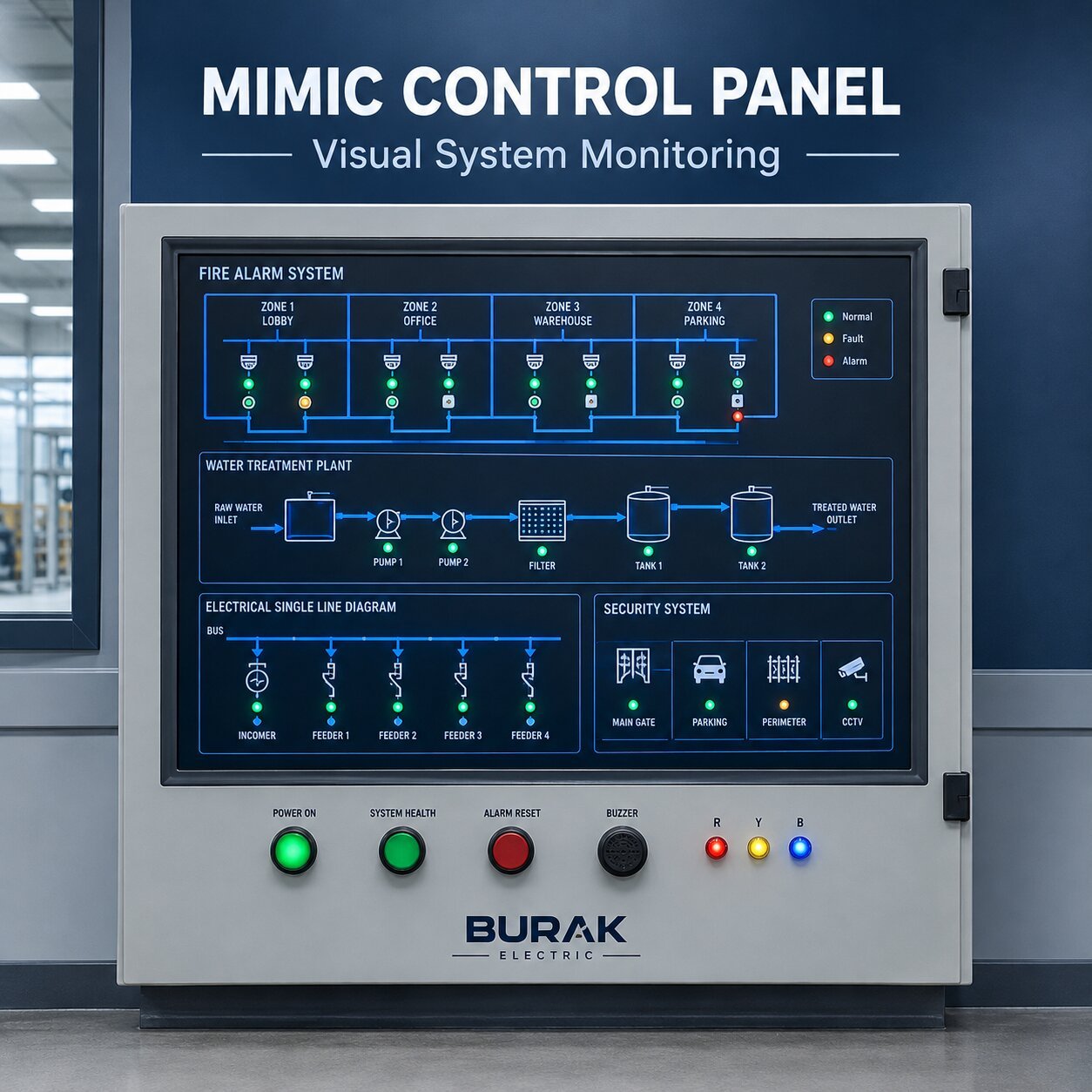
(No Ratings Yet)Loading...Spread the love“Clear system visualization is important in facilities where operators monitor several equipment sections or process connections. Mimic panels present this information through a visual diagram arranged to reflect the installation. Burak Electric offers mimic control panel solutions for industrial monitoring applications. A monitor panel with mimic board can be planned around the required
Premium ACwO 325W Soundbar with Wireless Woofer Category : Electronics
(No Ratings Yet)Loading...Spread the loveUpgrade your home entertainment with the premium ACwO Sphōrika N333 325W soundbar, featuring a wireless woofer for deep bass and versatile connectivity for movies, music and TV.
Build a Feature-Rich Binary Options Trading Platform Category : Other - Gaming
(No Ratings Yet)Loading...Spread the loveA Quotex Clone Script helps businesses launch a branded online trading platform with features like live charts, demo accounts, payment integration, trading history, and admin dashboards. Its design, functionality, and integrations can be customised to meet specific business requirements. Developing binary option trading platform like Quotex may requires reliable market data, secure payments,